
Executors#
Executors in HPX provide a flexible way to control how, when, and where tasks are executed. Instead of manually creating threads or managing thread pools, you can hand your tasks to an executor, and it takes care of the details of running them.
This page introduces the concept of executors, the main types available in HPX, and how to create custom executors.
What is an executor?#
An executor is an abstraction that separates the what from the how of task execution:
What: the work to be performed (e.g. a function or task).
How: whether the task runs synchronously, asynchronously, or in parallel across multiple cores.
By using executors, you can switch between execution strategies without rewriting your algorithms. HPX provides a rich set of executors with a unified API.
Main Executors in HPX#
HPX provides multiple executors. Below are three of the most commonly used:
Parallel Executor#
Default in HPX.
Creates a new HPX thread for every scheduled task.
Works well for large tasks, but frequent small tasks incur overhead due to thread creation/destruction.
#include <hpx/execution.hpp>
#include <hpx/algorithm.hpp>
#include <vector>

std::vector<int> data(100, 1);

hpx::for_each(
    hpx::execution::par,
    data.begin(), data.end(),
    [](int &x) {
        x += 1;
    }
);
Fork-Join Executor#
Spawns one thread per CPU core when created.
Threads are reused across tasks, avoiding repeated creation costs.
Efficient for workloads with many sequential parallel regions.
May waste resources if parallel work is limited.
#include <hpx/execution.hpp>
#include <hpx/algorithm.hpp>
#include <vector>

std::vector<int> data(100, 1);

hpx::execution::experimental::fork_join_executor exec;

hpx::for_each(
    hpx::execution::par.on(exec),
    data.begin(), data.end(),
    [](int &x) {
        x += 1;
    }
);
Sequential Executor#
Executes all tasks synchronously on the calling thread.
Useful for debugging (deterministic execution) or when parallelism brings no benefit.
Maintains the same executor-based API while running tasks sequentially.
#include <hpx/execution.hpp>
#include <hpx/algorithm.hpp>
#include <vector>

std::vector<int> data(100, 1);

hpx::execution::sequenced_executor seq_exec;

hpx::for_each(
    hpx::execution::seq.on(seq_exec),
    data.begin(), data.end(),
    [](int &x) { x += 1; }
);
Executors in real-world applications#
A practical example is the LULESH mini-application (a hydrodynamics benchmark).
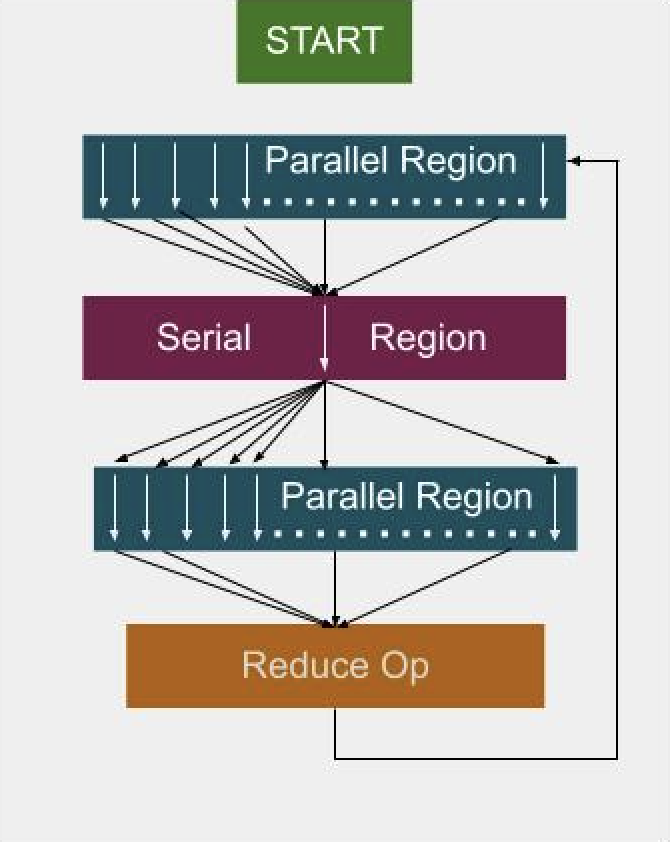
Fig. 11 Parallel executor: creates and destroys threads for each loop.#
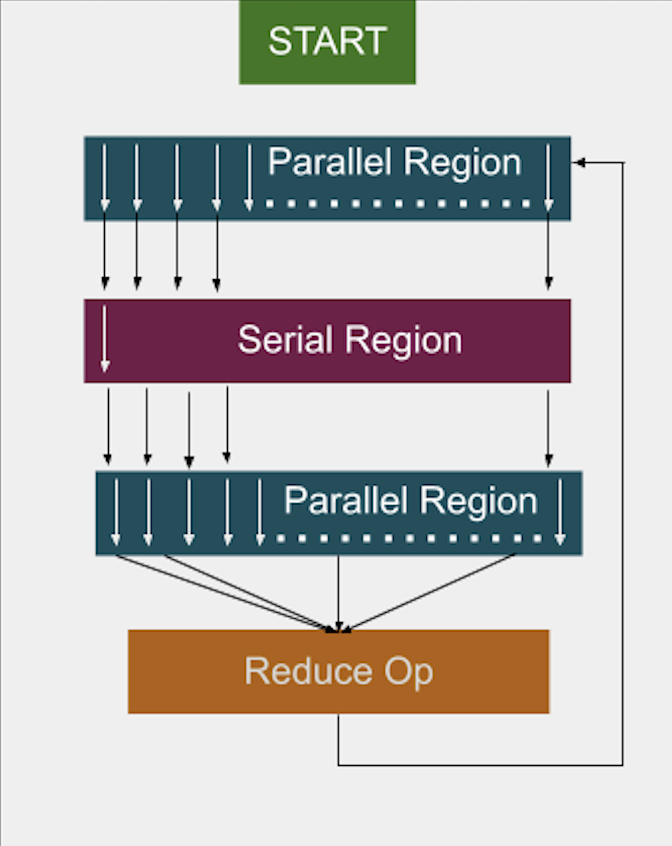
Fig. 12 Fork-join executor: reuses threads across loops.#
With the parallel executor, each parallel loop creates and destroys new threads, introducing overhead.
With the fork-join executor, threads are created once and reused across loops, reducing overhead and improving performance.
For bulk leaf regions that must not suspend, construct
fork_join_executorwiththread_stacksize::nostack(bodies must notasync/future::get/this_thread::suspend; see #3348).
In studies, the fork-join executor achieved significant speedups, in some cases more than twice as fast as traditional OpenMP implementations.
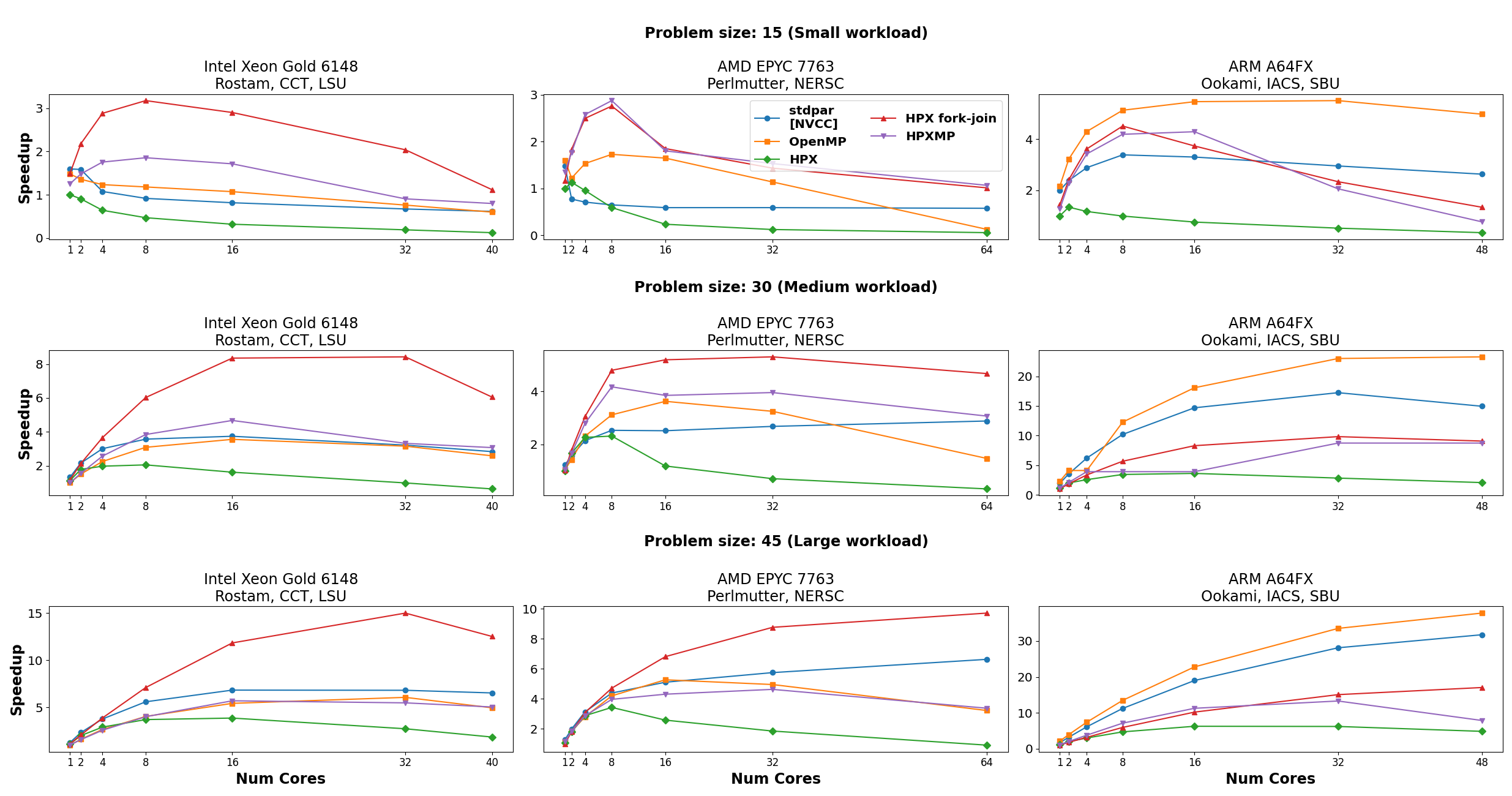
Fig. 13 Performance comparison between executors in the LULESH benchmark.#
Custom executors#
While HPX provides a variety of built-in executors, you may sometimes need to adapt task execution to your own requirements. This is where custom executors come in. By writing a small wrapper around an existing executor, you can extend its behavior?for example, to add logging, profiling information, or special scheduling rules?while still taking advantage of the HPX executor API.
Custom annotating executor#
The following example shows how to implement a simple executor that annotates tasks with a string label for easier debugging and profiling.
Note
Annotations do not affect how tasks run or what results they produce. Their main purpose is to give human-readable names to tasks so that they can be identified in profilers, and debuggers.
Full example code#
#include <hpx/hpx_main.hpp>
#include <hpx/include/parallel_executors.hpp>
#include <hpx/include/async.hpp>
#include <hpx/execution.hpp>
#include <hpx/modules/async_base.hpp>
#include <hpx/modules/threading_base.hpp>

#include <iostream>
#include <string>
#include <utility>

template <typename BaseExecutor>
struct simple_annotating_executor
{
    BaseExecutor base_;
    const char* annotation_;

    simple_annotating_executor(BaseExecutor exec, const char* ann)
        : base_(std::move(exec)), annotation_(ann)
    {}

    // Non-blocking one-way executor
    template <typename F, typename... Ts>
    friend void tag_invoke(hpx::parallel::execution::post_t,
                        simple_annotating_executor const& exec,
                        F&& f, Ts&&... ts)
    {
        hpx::post(
            hpx::annotated_function(std::forward<F>(f), exec.annotation_),
            std::forward<Ts>(ts)...);
    }

    // Synchronous execution
    template <typename F, typename... Ts>
    friend auto tag_invoke(hpx::parallel::execution::sync_execute_t,
                        simple_annotating_executor const& exec,
                        F&& f, Ts&&... ts)
    {
        return hpx::parallel::execution::sync_execute(
            exec.base_,
            hpx::annotated_function(std::forward<F>(f), exec.annotation_),
            std::forward<Ts>(ts)...);
    }
};

// Example functions
int compute_square(int x)
{
    std::cout << "[sync_execute] Running task with annotation\n";
    return x * x;
}

void say_hello()
{
    std::cout << "[post] Running task with annotation\n";
}

int main()
{
    simple_annotating_executor exec(hpx::execution::parallel_executor{}, "my_custom_task");

    // Synchronous execution
    int result = hpx::parallel::execution::sync_execute(exec, &compute_square, 7);
    std::cout << "Result from sync_execute: " << result << "\n";

    // Post a task
    hpx::parallel::execution::post(exec, &say_hello);

    return 0;
}
Explanation#
The first lines pull in the necessary HPX headers for executors, asynchronous execution, and annotated functions. The key one here is hpx/threading_base/annotated_function.hpp, which provides the facility to tag tasks with a string label. We then define a simple_annotating_executor that wraps another executor and associates an annotation string with every task:
template <typename BaseExecutor>
struct simple_annotating_executor
{
    BaseExecutor base_;
    const char* annotation_;

    simple_annotating_executor(BaseExecutor exec, const char* ann)
        : base_(std::move(exec)), annotation_(ann)
    {}
};
The post customization schedules a task to run asynchronously. We wrap the task in hpx::annotated_function so that it carries the annotation. Executors in HPX customize these operations through tag_invoke overloads, which are selected by special tag objects like post_t` and sync_execute_t. This is why the executor interface may look different from a normal member function API.
template <typename F, typename... Ts>
friend void tag_invoke(hpx::parallel::execution::post_t,
                    simple_annotating_executor const& exec,
                    F&& f, Ts&&... ts)
{
    hpx::post(
        hpx::annotated_function(std::forward<F>(f), exec.annotation_),
        std::forward<Ts>(ts)...);
}
The sync_execute customization runs a task immediately and returns the result. Again, we wrap the function with an annotation before executing. The key difference is that post schedules a task in a fire-and-forget style (no result is returned), while sync_execute blocks until the task finishes and gives you the result back.
template <typename F, typename... Ts>
friend auto tag_invoke(hpx::parallel::execution::sync_execute_t,
                    simple_annotating_executor const& exec,
                    F&& f, Ts&&... ts)
{
    return hpx::parallel::execution::sync_execute(
        exec.base_,
        hpx::annotated_function(std::forward<F>(f), exec.annotation_),
        std::forward<Ts>(ts)...);
}
Note how we delegate the actual execution to exec.base_, the underlying executor. This makes the custom executor lightweight: it only adds annotations, while leaving the scheduling strategy to the base executor (here, a parallel_executor).
We define two simple functions to demonstrate both synchronous and asynchronous execution: These functions also print to std::cout, but this output is not the actual annotation. Annotations are stored internally by HPX and become visible when you use debugging or profiling tools.
int compute_square(int x)
{
    std::cout << "[sync_execute] Running task with annotation\n";
    return x * x;
}

void say_hello()
{
    std::cout << "[post] Running task with annotation\n";
}
Finally, in main we create the executor with a base executor and annotation string. We then run one task with sync_execute (blocking, returns result) and one with post (asynchronous, fire-and-forget). You can also create multiple annotating executors with different strings, so each task gets its own label. This is especially useful in larger applications with many different kinds of tasks, where annotations make it much easier to trace what is happening.
int main()
{
    simple_annotating_executor exec(hpx::execution::parallel_executor{}, "my_custom_task");

    // Synchronous execution
    int result = hpx::parallel::execution::sync_execute(exec, &compute_square, 7);
    std::cout << "Result from sync_execute: " << result << "\n";

    // Post a task
    hpx::parallel::execution::post(exec, &say_hello);

    return 0;
}
Custom annotating executor with parallel algorithms#
The following example demonstrates how to use a custom annotating executor with HPX parallel algorithms, such as for_each. This allows you to attach annotations to tasks while executing them in parallel.
Full example code#
#include <hpx/execution.hpp>
#include <hpx/hpx_main.hpp>
#include <hpx/include/parallel_algorithm.hpp>
#include <hpx/include/parallel_executors.hpp>
#include <hpx/modules/threading_base.hpp>

#include <iostream>
#include <utility>
#include <vector>

template <typename BaseExecutor>
struct simple_annotating_executor
{
    BaseExecutor base_;
    char const* annotation_;

    using execution_category =
        hpx::traits::executor_execution_category_t<BaseExecutor>;

    simple_annotating_executor(BaseExecutor exec, char const* ann)
    : base_(std::move(exec))
    , annotation_(ann)
    {
    }

    // Bulk async_execute (used by parallel algorithms)
    template <typename F, typename Shape, typename... Ts>
    friend auto tag_invoke(hpx::parallel::execution::bulk_async_execute_t,
        simple_annotating_executor const& exec, F&& f, Shape const& shape,
        Ts&&... ts)
    {
        return hpx::parallel::execution::bulk_async_execute(
            exec.base_,
            hpx::annotated_function(std::forward<F>(f), exec.annotation_),
            shape, std::forward<Ts>(ts)...);
    }
};

namespace hpx::execution::experimental {

    // The annotating executor exposes the same executor categories as its
    // underlying (wrapped) executor.

    template <typename BaseExecutor>
    struct is_two_way_executor<simple_annotating_executor<BaseExecutor>>
    : is_two_way_executor<BaseExecutor>
    {
    };
}    // namespace hpx::execution::experimental

int main()
{
    using base_executor = hpx::execution::parallel_executor;
    simple_annotating_executor exec(base_executor{}, "for_each_task");

    std::vector<int> data = {1, 2, 3, 4, 5};

    // Use the custom executor with a parallel algorithm
    hpx::for_each(hpx::execution::par.on(exec),    // attach executor
        data.begin(), data.end(), [](int& x) {
            std::cout << "Processing " << x << " on thread "
                    << hpx::get_worker_thread_num() << "\n";
            x *= x;
        });

    std::cout << "Squared values: ";
    for (int v : data)
        std::cout << v << " ";
    std::cout << "\n";

    return 0;
}
Explanation#
Similar as before, the first lines pull in the necessary HPX headers for executors, asynchronous execution, and annotated functions. The key one here is hpx/threading_base/annotated_function.hpp, which provides the facility to tag tasks with a string label. We then define a simple_annotating_executor that wraps another executor and associates an annotation string with every task:
template <typename BaseExecutor>
struct simple_annotating_executor
{
    BaseExecutor base_;
    const char* annotation_;

    using execution_category =
        hpx::traits::executor_execution_category_t<BaseExecutor>;

    simple_annotating_executor(BaseExecutor exec, const char* ann)
        : base_(std::move(exec)), annotation_(ann)
    {}
};
Note that we expose the execution category of the custom executor with using execution_category = hpx::traits::executor_execution_category_t<BaseExecutor>. We inherit the execution category from the underlying executor (BaseExecutor`), which ensures that our simple_annotating_executor behaves like the base executor in terms of parallelism and task execution capabilities.
The bulk_async_execute customization schedules a set of tasks to run asynchronously. We wrap each task in hpx::annotated_function so that it carries the annotation. Executors in HPX customize these operations through tag_invoke overloads, which are selected by special tag objects like bulk_async_execute_t. This is why the executor interface may look different from a normal member function API - it uses tag dispatch to integrate seamlessly with the HPX parallel algorithms infrastructure.
template <typename F, typename Shape, typename... Ts>
friend auto tag_invoke(hpx::parallel::execution::bulk_async_execute_t,
    simple_annotating_executor const& exec, F&& f, Shape const& shape,
    Ts&&... ts)
{
    return hpx::parallel::execution::bulk_async_execute(
        exec.base_,
        hpx::annotated_function(std::forward<F>(f), exec.annotation_),
        shape, std::forward<Ts>(ts)...);
}
Note how we delegate the actual execution to exec.base_, the underlying executor. This makes the custom executor lightweight: it only adds annotations, while leaving the scheduling strategy to the base executor (here, a parallel_executor).
The hpx::execution::experimental namespace contains traits that describe executor capabilities, such as whether an executor can run tasks one-way, two-way, or never-blocking. These traits are used internally by HPX to verify that an executor is compatible with a given parallel algorithm or execution policy.
namespace hpx::execution::experimental {

    // The annotating executor exposes the same executor categories as its
    // underlying (wrapped) executor.

    template <typename BaseExecutor>
    struct is_never_blocking_one_way_executor<
        simple_annotating_executor<BaseExecutor>>
    : is_never_blocking_one_way_executor<BaseExecutor>
    {
    };

    template <typename BaseExecutor>
    struct is_one_way_executor<simple_annotating_executor<BaseExecutor>>
    : is_one_way_executor<BaseExecutor>
    {
    };

    template <typename BaseExecutor>
    struct is_two_way_executor<simple_annotating_executor<BaseExecutor>>
    : is_two_way_executor<BaseExecutor>
    {
    };
}
is_never_blocking_one_way_executor indicates whether the executor can schedule tasks in a fire-and-forget style without blocking.
is_one_way_executor indicates support for one-way execution (tasks can be scheduled but no result is returned).
is_two_way_executor indicates support for two-way execution (tasks return a result or a future).
In all cases, the custom executor inherits the capabilities of the base executor, so it integrates seamlessly with HPX algorithms.
This design ensures that simple_annotating_executor can be used anywhere its underlying executor could be used, while still adding the annotation functionality. It keeps the custom executor lightweight and fully compatible with the parallel algorithms infrastructure.
In main, we create the executor with a base executor and an annotation string, and then use it with a parallel algorithm:
int main()
{
    using base_executor = hpx::execution::parallel_executor;
    simple_annotating_executor exec(base_executor{}, "for_each_task");

    std::vector<int> data = {1, 2, 3, 4, 5};

    // Use the custom executor with a parallel algorithm
    hpx::for_each(hpx::execution::par.on(exec),    // attach executor
        data.begin(), data.end(), [](int& x) {
            std::cout << "Processing " << x << " on thread "
                    << hpx::get_worker_thread_num() << "\n";
            x *= x;
        });

    std::cout << "Squared values: ";
    for (int v : data)
        std::cout << v << " ";
    std::cout << "\n";

    return 0;
}
First, we create a base executor (parallel_executor) and wrap it in our simple_annotating_executor, providing an annotation string “for_each_task”. This custom executor will attach the annotation to every task it schedules, while delegating actual execution to the base executor.
We then use hpx::for_each with a parallel execution policy and attach our custom executor using par.on(exec): * hpx::execution::par.on(exec) attaches our custom executor to the algorithm. * for_each internally partitions the work across threads and schedules each task using bulk_async_execute. * Each task is annotated with “for_each_task”, visible in debuggers and profilers. * The results of the parallel computation are stored in the data vector, demonstrating that the algorithm executed successfully in parallel.
This pattern is especially useful in larger applications with many tasks, as annotations make it much easier to trace and debug the execution of parallel algorithms.
Task sizes#
A task can tell the scheduler how long it is expected to run. The size is a
property of the function a task runs, so it is attached to the function:
hpx::with_task_size<Size>(f) and its shorthands hpx::nano_task(f),
hpx::small_task(f), hpx::medium_task(f) and hpx::large_task(f)
return a function that carries one of the sizes of
hpx::task_size. hpx::traits::get_task_size_v<F> reads it from
the type of a function, and is task_size::unknown for a function without a
size. hpx::traits::get_task_size<F>::call(f) reads it from the function
object f, which also finds the size of a function stored in an
hpx::function or an hpx::move_only_function, known at run time only.
Note
As a rule of thumb, a nano task runs for about a nanosecond, a small task
for about 100 nanoseconds, a medium task for about 10 microseconds,
and a large task for about a millisecond or more: each size stands for a
hundred times the run time of the one below it, and
hpx::task_size_duration(size) returns it as a std::chrono
duration. Nano is mostly meant for loop bodies, for instance comparing or
adding builtin types; a task that runs only one of them is never worth a
thread of its own. A task that calls
a function many times has a size that follows from the function’s size, a
hundred nano calls make a small task, a hundred small calls a medium one
and a hundred medium calls a large one;
hpx::bulk_task_size(size, calls) computes it. The sizes stand for these
run times so that the scheduler can make use of them: a size that only
ordered tasks relative to each other could not be compared with anything
the scheduler knows, while a known run time can be compared with its own
costs, for instance the cost of stealing a task (on the order of a
microsecond) or of waking a worker. This allows decisions like not
stealing small tasks, or waking a worker only for a large task or for a
backlog of smaller ones.
// a long running task
hpx::future<double> r = hpx::async(hpx::large_task(&simulate), input);

// a short continuation
auto next = r.then(hpx::small_task([](auto&& r) { return r.get() * 2; }));
The size reaches the scheduler with the thread that runs the function:
hpx::post, hpx::async, .then(), dataflow, hpx::thread,
hpx::run_as_hpx_thread and the post,
sync_execute, async_execute and then_execute of
hpx::execution::parallel_executor (and of the executors built on it)
store it in the thread_schedule_hint of the thread they create for the
function.
The tasks of bulk operations run the function many times, so their size is
derived from the function’s size with hpx::bulk_task_size:
hpx::execution::parallel_executor and the bulk operations of
hpx::execution::experimental::thread_pool_scheduler (which the scheduler
executors use as well) give each of their worker tasks the size of the share
of the elements it runs. For bulk_chunked, which passes a range of
elements to each call, the function’s size is still the size of its work for
one element, not for a whole range. Hierarchical spawning
(hpx::execution::parallel_executor_spawn_hierarchically) creates a task
for each element instead: these tasks carry the function’s size, and the
tasks that only spawn them are small. The parallel algorithms run their loop
body in chunks, and the function they give to the executor has the size of
a chunk, derived from the size of the loop body and the number of iterations
in a chunk. A loop body without a size gives tasks without a size.
The size of the loop body can also decide how a parallel algorithm divides
its iterations: with the executor parameters
hpx::execution::experimental::task_size_chunk_size, the run time of one
iteration is the one the loop body’s size stands for, and the loop runs on as
many cores, in as many chunks, as that run time is worth. A short loop of
nano or small iterations then runs as a single chunk on the calling thread
instead of being spread over all cores:
hpx::for_each(hpx::execution::par.with(
                  hpx::execution::experimental::task_size_chunk_size()),
    v.begin(), v.end(), hpx::nano_task([](int& i) { ++i; }));
By default, task_size_chunk_size makes chunks of at least 2.5
microseconds and gives each core 8 of them. Values given to its
constructor replace these defaults for one loop, the configuration entries
hpx.task_size_chunk_size.min_chunk_time_us and
hpx.task_size_chunk_size.chunks_per_core replace them for all loops (see
ini_hpx_task_size_chunk_size). The benchmark
task_size_chunk_size_sweep_test measures loops of different sizes with
many pairs of these values and prints the pair that suits a machine best, in
the form of these configuration entries.
If HPX is configured with HPX_WITH_TASK_SIZE_DEFAULT_PARAMETERS=ON, the
default executor parameters (default_parameters, used by par and by
the executors unless other parameters are given) are derived from
task_size_chunk_size. A loop whose body has a task size is then chunked as
described here without passing task_size_chunk_size explicitly, all other
loops are chunked as before.
To tune these values for a machine, build and run the benchmark. It is built
when HPX is configured with HPX_WITH_TESTS=ON and
HPX_WITH_TESTS_BENCHMARKS=ON (the default):
$ cmake --build . --target task_size_chunk_size_sweep_test
$ ./bin/task_size_chunk_size_sweep_test
It uses all cores by default, as --hpx:threads does, and takes about half
a minute. It prints a line of comma separated values for each loop and pair of
values, then a summary for each pair, and ends with the two configuration
entries of the pair closest to the best values for each loop, for instance:
hpx.task_size_chunk_size.min_chunk_time_us=2.5
hpx.task_size_chunk_size.chunks_per_core=8
These lines can be added to an ini file (see The HPX ini file format), or passed
with --hpx:ini. --max_work_us limits the longest loop (in
microseconds of work, 10000 by default), --time_per_case_ms the time each
loop is repeated for (300 by default), and --min_reps and --max_reps
the number of repetitions of each loop (5 and 300).
A size given to an executor, a launch policy or a scheduler through their
thread_schedule_hint has no effect: the hint of a thread created for a
function always gets that function’s size, which is task_size::unknown if
the function has none. The exceptions are
hpx::execution::experimental::scheduler_executor and
hpx::execution::experimental::explicit_scheduler_executor: they create
their threads through a scheduler before they see the function, so these
threads have task_size::unknown even if the function has a size.
Wrappers forward the size of the function they wrap. The ones HPX provides
(hpx::bind, hpx::bind_front, hpx::bind_back,
hpx::util::deferred_call, hpx::annotated_function and the wrappers
the parallel algorithms create around their loop bodies, for instance) do. A
wrapper of your own can do the same by specializing
hpx::traits::get_task_size, the same way wrappers forward annotations with
hpx::traits::get_function_annotation. It derives from the specialization
for the wrapped function, which gives it value, and forwards call:
template <typename F>
struct my_wrapper
{
    F f;

    template <typename... Ts>
    decltype(auto) operator()(Ts&&... ts)
    {
        return f(std::forward<Ts>(ts)...);
    }
};

template <typename F, hpx::task_size Size>
struct hpx::traits::get_task_size<my_wrapper<F>, Size>
  : hpx::traits::get_task_size<F, Size>
{
    static constexpr hpx::task_size call(
        my_wrapper<F> const& w) noexcept
    {
        return hpx::traits::get_task_size<F, Size>::call(w.f);
    }
};
P2079 parallel scheduler#
C++26 (P2079)
exposes std::execution::get_parallel_scheduler(). HPX implements this as
hpx::execution::experimental::get_parallel_scheduler().
Earlier drafts of the same paper (P2079R2) used the names system_context and
system_scheduler. Those public types were dropped. The default backend in
HPX reuses the default thread pool’s worker threads instead of spawning a
separate thread pool for the scheduler.
    auto snd = ex::schedule(ex::get_parallel_scheduler()) |
        ex::then([] { return 42; });
    auto [val] = ex::sync_wait(std::move(snd)).value();
To bind the scheduler to a named HPX pool created with the resource
partitioner, pass that pool to get_parallel_scheduler. There is no
need to write a custom parallel_scheduler_backend class:
    auto named = ex::schedule(ex::get_parallel_scheduler(
                     hpx::resource::get_thread_pool("custom"))) |
        ex::then([] {
            // runs on the "custom" pool
        });
    ex::sync_wait(std::move(named));
get_thread_pool throws hpx::exception for an unknown pool name.
The pool must outlive the scheduler; HPX does not extend the pool’s
lifetime or diagnose a dangling pool.
Replacing the default backend#
Most applications should use the default scheduler or the named-pool overload
above. A replacement backend is intended for integrations that need
get_parallel_scheduler() to submit work to another execution service, or
that need custom resource management, scheduling, or instrumentation that an
HPX thread pool does not provide.
A replacement derives from parallel_scheduler_backend and implements
schedule, schedule_bulk_chunked, and schedule_bulk_unchunked. Each
function receives a type-erased receiver and preallocated scratch storage. The
backend schedules the requested work and eventually completes the receiver
exactly once with set_value, set_error, or set_stopped. A bulk
backend calls the receiver’s execute member for the assigned index ranges
before delivering the terminal completion.
Install an existing backend object with set_parallel_scheduler_backend:
namespace ex = hpx::execution::experimental;

auto previous = ex::query_parallel_scheduler_backend();
ex::set_parallel_scheduler_backend(
    std::make_shared<my_parallel_scheduler_backend>());

auto scheduler = ex::get_parallel_scheduler();

// Restore the process-wide backend after all operations using it finish.
ex::set_parallel_scheduler_backend(std::move(previous));
The replacement is process-wide and affects subsequent calls to
get_parallel_scheduler(). Schedulers obtained earlier retain shared
ownership of their original backend. Do not replace a backend while operations
using it are in flight.
Libraries that select a backend during initialization can instead call
set_parallel_scheduler_backend_factory before the first
get_parallel_scheduler() or query_parallel_scheduler_backend() call.
The factory is invoked lazily and its backend is shared by subsequent default
schedulers. Changing the factory after that backend has been created does not
replace the active backend; use set_parallel_scheduler_backend for an
immediate replacement.
Replacement backends receive a parallel_scheduler_receiver_proxy for each
operation. Its try_query<P>(query) member exposes supported properties from
the connected receiver’s environment. In particular,
try_query<inplace_stop_token>(get_stop_token) returns the receiver’s stop
token when its environment provides that type. Unsupported query and result
type combinations return std::nullopt.